
WHAT WE DO
───── Hearing Aids
Compassionate Audiologic Care
At Advanced Audiology Concepts, we provide advanced hearing technology with compassionate, patient-focused care. Today’s hearing aids are smaller, more comfortable, and easier to use than ever before — helping you hear conversations clearly, stay socially connected, and improve your overall quality of life.
Our audiologists will help you choose the best hearing aids for your lifestyle, hearing needs, and budget while guiding you every step of the way.
When Is It Time for Hearing Aids?
As soon as hearing loss begins affecting your daily life. Hearing aids can help you:
- Hear conversations more clearly
- Stay socially connected
- Reduce listening fatigue and stress
- Support brain health and balance
- Improve overall confidence and quality of life
Personalized Hearing Solutions
We’ll help you select hearing aids that are:
- Comfortable and easy to wear
- Simple to operate and maintain
- Customized to your hearing needs
- Equipped with the latest Bluetooth technology
We also provide hands-on training, device setup, and ongoing support to keep you hearing your best for years to come.
───── Hearing Tests ─────
Comprehensive Hearing Evaluations
A professional hearing evaluation is the best way to determine if you have hearing loss. If hearing difficulties are affecting your daily life, our audiologists are here to help with comprehensive testing and personalized care.

Signs You May Need a Hearing Test
- Turning the TV volume up too high
- Trouble hearing in noisy environments
- Frequently asking people to repeat themselves
- Difficulty hearing women or children clearly
- Avoiding conversations or social settings
- Ringing or buzzing in the ears (tinnitus)
Understanding Hearing Loss
A hearing test helps determine the type and severity of hearing loss and whether medical treatment, hearing aids, or other hearing care options may help. A hearing test can also provide a baseline of your hearing, making it easier to monitor changes over time and identify concerns early.
Common Types of Hearing Loss:
- Conductive Hearing Loss – Often caused by issues in the outer or middle ear and may be medically treatable.
- Sensorineural Hearing Loss – Permanent inner ear or nerve damage commonly treated with hearing aids.
- Mixed Hearing Loss – A combination of both types.
Early testing and treatment can help protect your hearing and improve your quality of life.
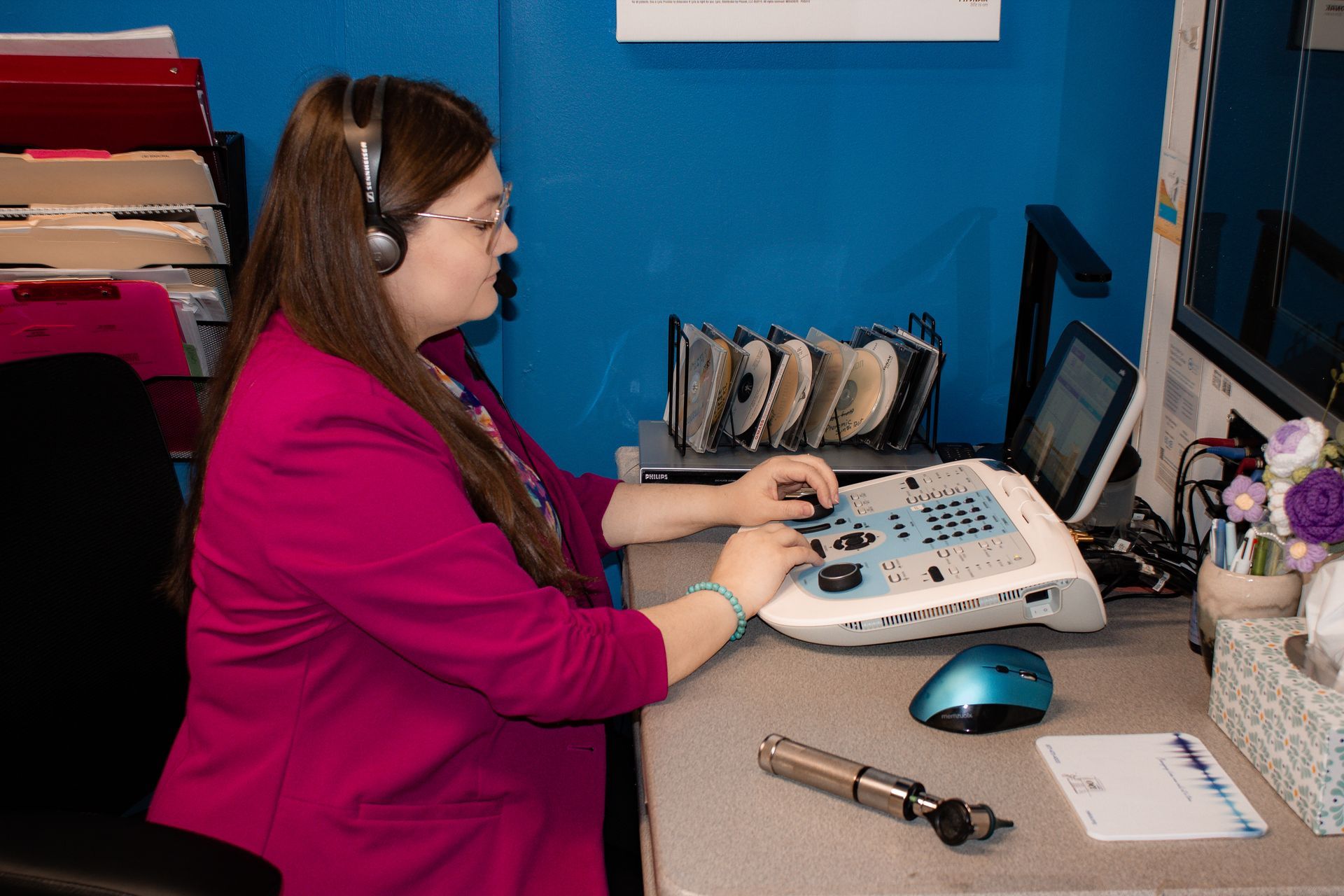
What to Expect During Your Hearing Test
Our hearing evaluations are comfortable, simple, and completed in a state-of-the-art sound booth. Your appointment may include:
- Examining your ears with an otoscope
- Listening for tones and speech responses
- Speech clarity testing
- Eardrum and middle ear testing
───── Ear Wax Removal
Professional Ear Wax Removal
Excess ear wax can affect your hearing, cause discomfort, and even interfere with hearing aids. Our professional ear wax removal services are safe, gentle, and designed to restore clear hearing and comfort.
Signs You May Have Excess Ear Wax

- Muffled or decreased hearing
- Ear fullness or pressure
- Ringing in the ears
- Ear discomfort or itching
- Hearing aids not working properly
- Dizziness or balance issues
Safe, Professional Care
Avoid using cotton swabs or at-home tools that can push wax deeper into the ear canal. Our audiologists use professional techniques and equipment to safely remove excess wax and evaluate your overall ear health.
If ear wax is impacting your hearing or comfort, we’re here to help you hear clearly again.
───── Process ─────
Our Process — What to Expect
Hearing Evaluation
The hearing evaluation takes place in our state-of-the-art hearing booth. Be sure to bring your ID and insurance card to your visit.
Choose Your Hearing Aids
If hearing loss is detected, we find out more about your lifestyle to help determine which hearing aids would be the best fit. We also talk about your budget and figure the decision out together.
Fitting & Setup
After you’ve made your selection, we schedule a fitting appointment to educate you how to put them in, pair the devices to your Bluetooth, and clean and maintain them for top performance going forward. We take the time to walk you through everything and what you can expect going forward.
Ongoing Support
Every several months, you will come in for a maintenance appointment, where any fine-tuning and adjustments are made.

───── Repair & Maintenance
Hearing Aid Repair & Maintenance
If your hearing aids are not working properly, our team is here to help. We provide professional troubleshooting, maintenance, and repair services to keep your devices performing at their best.
Common Hearing Aid Issues
- Weak or distorted sound
- Hearing aids not turning on
- Intermittent sound or feedback
- Bluetooth connectivity problems
- Moisture or battery issues
- Broken tubing, receivers, or earmolds
Fast, Reliable Support
Our audiologists can often resolve minor issues in the office with professional cleaning, adjustments, and maintenance. If additional repairs are needed, we’ll help coordinate manufacturer service and keep you informed throughout the process.
Regular maintenance and cleanings can help extend the life of your hearing aids and ensure the best possible performance every day.
───── Treatment & Management ─────
Tinnitus Treatment & Management

Tinnitus is the perception of ringing, buzzing, or other sounds in the ears without an external source. It can range from mildly distracting to disruptive in everyday life and is often linked to hearing loss or other underlying conditions.
Common Causes of Tinnitus
Age-related hearing loss
Noise-induced hearing loss
Ear Wax
High blood pressure
Temporomandibular Joint (TMJ) disorders
Thyroid conditions
Fluid in the middle ear
Comprehensive Tinnitus Evaluations
While there is no cure for tinnitus, sound therapy and professional treatment can help reduce its impact and improve quality of life.
Your evaluation may include:
- Tinnitus questionnaires to measure how symptoms affect daily life
- Hearing testing and tinnitus assessments
- Matching the pitch and volume of your tinnitus
- Personalized sound therapy recommendations
Our goal is to help reduce the awareness of tinnitus and create more comfortable, quieter listening experiences.
───── Hearing Care ─────
Pediatric Hearing Care
Hearing plays an important role in a child’s speech, language, learning, and social development. Early diagnosis and treatment can help children build confidence, communication skills, and reach important developmental milestones.



Signs of Hearing Loss in Children
You may want to schedule a hearing evaluation if your child:
- Does not respond consistently to sounds or their name
- Has delayed speech or language development
- Frequently says “what?” or asks for repetition
- Turns the TV or devices up too loud
- Has trouble following directions
- Struggles in school or social situations
Developmental Hearing Milestones
Birth to 3 Months
- Startles to loud sounds
- Responds to familiar voices
- Is soothed by soft sounds
4 to 6 Months
- Turns toward sounds
- Enjoys sound-making toys
- Begins babbling and repeating sounds
7 Months to 1 Year
- Responds to their name
- Understands simple words and requests
- Uses a variety of babbling sounds
1 to 2 Years
Follows simple directions
Uses and learns new words regularly
Enjoys being read to and interacting socially
Our team provides compassionate pediatric hearing evaluations to help support your child’s healthy growth and development.
───── Telehealth
Remote Device Adjustments
Enjoy convenient follow-up care from the comfort of your home with our remote hearing aid support. Many modern hearing aids can be adjusted through your smartphone using a secure internet connection.
Remote Care Makes It Easy To:
- Reduce trips to the office
- Receive hearing aid adjustments remotely
- Get support from your audiologist wherever you are
- Stay connected with ongoing hearing care
All remote appointments are scheduled in advance, and our team will help set everything up on your phone and show you exactly how to connect for your visit.
───── Real Ear Verification & Text Box Measures─────
Precision Hearing Aid Fittings Backed by Best Practices
At Advanced Audiology Concepts, we believe hearing aids should do more than simply make sounds louder—they should be programmed specifically for your ears, your hearing loss, and your lifestyle. That's why we include Real Ear Verification and Test Box Measurements as part of our comprehensive hearing aid services.
Real Ear Verification:
The Gold Standard in Hearing Aid Fitting
Real Ear Verification (also called Real Ear Measurements or REM) allows us to measure exactly how your hearing aids perform while they are in your ears. Using tiny microphones placed in the ear canal, we verify that your hearing aids are delivering the precise amount of amplification prescribed for your hearing loss.
Why is this important?
- Ensures speech sounds are clear and comfortable
- Confirms your hearing aids are programmed accurately
- Improves understanding in quiet and noisy environments
- Reduces the need for guesswork and repeated adjustments
- Provides objective results based on your unique ears
Research consistently shows that patients fitted with Real Ear Verification experience greater satisfaction and better hearing outcomes.
TEXT BOX MEASURES:
Confirming Your Devices Are Performing Properly
Test Box Measurements allow us to objectively evaluate hearing aid performance outside the ear using specialized equipment. This process helps us:
- Verify hearing aid function and sound quality
- Compare current performance to manufacturer specifications
- Detect subtle changes that may indicate a need for maintenance or repair
- Ensure consistency after adjustments or servicing
Our Commitment to Evidence-Based Care
Not every hearing care provider performs Real Ear Verification, but we believe every patient deserves the highest standard of care. By incorporating these advanced measurements into our fitting process, we can provide hearing solutions that are accurate, personalized, and optimized for long-term success.
Because hearing aids are an investment—and proper verification helps ensure you receive the full benefit of that investment.
Did You Know?
Studies show that hearing aids verified with Real Ear Measurements provide better speech understanding and higher patient satisfaction than fittings based on software settings alone.
Additional Services
- Assistive listening devices
- FM Systems
- Hearing aid supplies
- Counseling
───── Frequently Asked ─────
Do only older adults have hearing loss?
Hearing loss isn’t confined to older individuals; it affects people of all ages. Only about one-third of hearing loss patients are older than 65.
What is the most common cause of hearing loss?
The most common cause of hearing loss is noise exposure. While 85 decibels (dB) is considered the safety threshold, exposure to even moderately loud noises can cause permanent hearing damage.
What do I need to know about hearing aids?
The stigma associated with wearing hearing aids has long disappeared. Today’s digital devices are small, sleek, comfortable and discreet. If you are concerned with other peoples’ perceptions, you can opt for styles that are worn in the ear canal including invisible extended wear devices, making them virtually invisible.
Are hearing aids a cure for hearing loss?
Hearing aids are not a cure for hearing loss, but they do help many hearing-impaired individuals communicate more effectively. They work by amplifying sound vibrations that enter the ear. It is estimated that 95 percent of those suffering from hearing loss benefit from hearing aids – although only one out of five people with hearing loss seek treatment.
Do I have to wear two hearing aids?
Two hearing aids are better than one. Wearing two hearing aids makes sense, given the fact that we have two ears. This gives us directional hearing, enabling us to localize the source of a sound; as a result, we can hear better in noisy environments. Most types of hearing loss affect both ears anyway. Ninety percent of hearing loss patients benefit from wearing two hearing aids.
───── Loved By Our Patients ─────